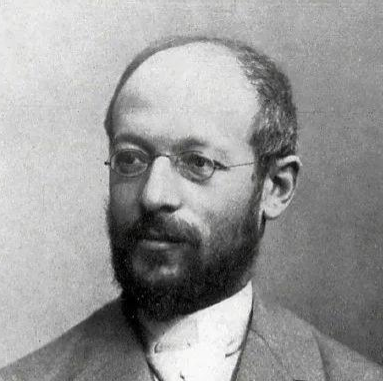
格奧爾格·齊美爾
德國(guó)社會(huì)學(xué)家、哲學(xué)家
The essence of modernity is psychologism, the experiencing and interpretation of the world in terms of the reactions of our inner life and indeed as an inner world, the dissolution of fixed contents in the fluid element of the soul, from which all that is substantive is filtered and whose forms are merely forms of motion.
現(xiàn)代文化的發(fā)展特點(diǎn)是一個(gè)人可能稱之為客觀精神對(duì)主觀精神的支配。
The individual has become a mere cog in an enormous organization of things and powers which tear from his hands all progress, spirituality, and value in order to transform them from their subjective form into the form of a purely objective life.
The metropolis exacts from man as a discriminating creature a different amount of consciousness than does rural life.
The stranger is close to us, insofar as we feel between him and ourselves common features of a national, social, occupational, or generally human, nature. He is far from us, insofar as these common features extend beyond him or us, and connect us only because they connect a great many people.
The intellectually sophisticated person is indifferent to all genuine individuality, because relationships and reactions result from it which cannot be exhausted with logical operations.
智力上復(fù)雜的人對(duì)所有真正的個(gè)性都漠不關(guān)心,因?yàn)橛纱水a(chǎn)生的關(guān)系和反應(yīng)不能用邏輯操作來(lái)窮盡。
The essence of modernity is psychologism, the experiencing and interpretation of the world in terms of the reactions of our inner life and indeed as an inward world.
現(xiàn)代性的本質(zhì)是心理主義,即根據(jù)我們內(nèi)心生活的反應(yīng)來(lái)體驗(yàn)和解釋世界,確實(shí)將其視為一個(gè)內(nèi)在的世界。
Fashion is a form of imitation and so of social equalization, but, paradoxically, in changing incessantly, it differentiates one time from another and one social stratum from another.
時(shí)尚是一種模仿形式,因此也是社會(huì)平等化的一種形式,但矛盾的是,在不斷變化中,它將一個(gè)時(shí)代與另一個(gè)時(shí)代區(qū)分開來(lái),將一個(gè)社會(huì)階層與另一個(gè)社會(huì)階層區(qū)分開來(lái)。
The metropolis exacts from man as a discriminating creature a different amount of consciousness than does rural life.
Money is concerned only with what is common to all, i.e., the exchange value, and it reduces all quality and individuality to the question: How much?
金錢只關(guān)注所有事物共有的東西,即交換價(jià)值,它將所有的質(zhì)量和個(gè)性都簡(jiǎn)化為一個(gè)問(wèn)題:多少?
The stranger is an element of the group itself, not unlike the poor and sundry 'inner enemies'—an element whose membership within the group involves both being outside it and confronting it.
The individual is reduced to a negligible quantity, perhaps less in his consciousness than in his habits and in the unconscious adjustments of his life.
個(gè)人被簡(jiǎn)化為一個(gè)可以忽略不計(jì)的量,也許在他的意識(shí)中不如在他的習(xí)慣和生活無(wú)意識(shí)調(diào)整中少。
The problem of the modern age is the problem of the individual's self-preservation in the face of the overwhelming power of the social mechanism.
現(xiàn)代時(shí)代的問(wèn)題是個(gè)人在面對(duì)社會(huì)機(jī)制的壓倒性力量時(shí)的自我保存問(wèn)題。
The essence of modernity is psychologism, the experiencing and interpretation of the world in terms of the reactions of our inner life and indeed as an inner world, the dissolution of fixed contents in the fluid element of the soul, from which all that is substantive is filtered and whose forms are merely forms of motion.
- «
- »