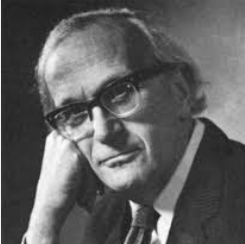
H·L·A·哈特
20世紀(jì)最重要的法律哲學(xué)家之一
Legal rules are not merely predictions of what courts will do, but are reasons for action.
法律規(guī)則不僅僅是法院將做什么的預(yù)測(cè),而是行動(dòng)的理由。
Law is the union of primary and secondary rules.
法律是主要規(guī)則和次要規(guī)則的結(jié)合。
The concept of law is not a concept of a thing, but of a complex social practice.
法律的概念不是一個(gè)事物的概念,而是一個(gè)復(fù)雜的社會(huì)實(shí)踐的概念。
The existence of law is one thing; its merit or demerit is another.
法律的存在是一回事;其優(yōu)劣是另一回事。
Law is not a system of rules, but a system of principles.
法律不是規(guī)則的體系,而是原則的體系。
The separation of law and morals is a necessary feature of a legal system.
法律與道德的分離是法律體系的一個(gè)必要特征。
The minimum content of natural law is necessary for any legal system.
自然法的最低內(nèi)容是任何法律體系所必需的。
Legal rules are not commands but rather standards of conduct.
法律規(guī)則不是命令,而是行為標(biāo)準(zhǔn)。
The existence of a legal system is a matter of fact, not of morality.
法律體系的存在是一個(gè)事實(shí)問(wèn)題,而不是道德問(wèn)題。
A legal system is a system of rules which are valid according to the system's own criteria of validity.
法律體系是根據(jù)其自身的有效性標(biāo)準(zhǔn)而有效的規(guī)則體系。
- «
- »