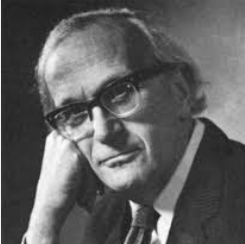
H·L·A·哈特
20世紀(jì)最重要的法律哲學(xué)家之一
The concept of legal obligation is central to the understanding of law.
法律義務(wù)的概念對于理解法律至關(guān)重要。
The minimum content of natural law is necessary for the survival of any society.
自然法的最低內(nèi)容對于任何社會(huì)的生存都是必要的。
Legal positivism emphasizes the separation of law and morality.
法律實(shí)證主義強(qiáng)調(diào)法律與道德的分離。
The rule of recognition is the ultimate rule in a legal system, which identifies the criteria for valid law.
承認(rèn)規(guī)則是法律體系中的終極規(guī)則,它確定了有效法律的標(biāo)準(zhǔn)。
Law must be understood as a social phenomenon, not merely as a set of abstract norms.
法律必須被理解為一種社會(huì)現(xiàn)象,而不僅僅是一套抽象規(guī)范。
The internal point of view is crucial for understanding the nature of law.
內(nèi)部觀點(diǎn)對于理解法律的本質(zhì)至關(guān)重要。
Legal rules are not merely commands backed by threats; they are also rules that confer powers and create obligations.
法律規(guī)則不僅僅是威脅支持的命令;它們也是賦予權(quán)力和創(chuàng)造義務(wù)的規(guī)則。
The existence of a legal system is a matter of social fact.
法律體系的存在是一個(gè)社會(huì)事實(shí)。
Law is a system of rules, a union of primary rules of obligation and secondary rules of recognition, change, and adjudication.
法律是一個(gè)規(guī)則系統(tǒng),是義務(wù)的主要規(guī)則與承認(rèn)、變更和裁決的次要規(guī)則的結(jié)合。
The concept of law involves the union of primary and secondary rules.
法律的概念涉及主要規(guī)則和次要規(guī)則的結(jié)合。