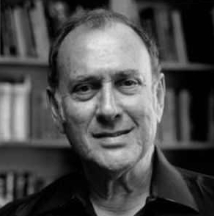
哈羅德·品特
2005年被授予諾貝爾文學(xué)獎(jiǎng)
There are no hard distinctions between what is real and what is unreal, nor between what is true and what is false. A thing is not necessarily either true or false; it can be both true and false.
The past is what you remember, imagine you remember, convince yourself you remember, or pretend you remember.
I have often been asked how my plays come about. I cannot say. Nor can I ever explain to myself what they mean.
我經(jīng)常被問(wèn)及我的劇本是如何產(chǎn)生的。我說(shuō)不出來(lái)。我也無(wú)法向自己解釋它們的意思。
The past is a foreign country; they do things differently there.
One way of looking at speech is to say that it is a constant stratagem to cover nakedness.
I tend to think that the camera is much more reliable than the human eye.
我傾向于認(rèn)為相機(jī)比人眼可靠得多。
The more acute the experience, the less articulate its expression.
I tend to think that the longer you look at a thing, the more abstract it becomes, and, ironically, the more real.
我傾向于認(rèn)為,你越長(zhǎng)時(shí)間看一件事,它就越抽象,而且諷刺的是,它就越真實(shí)。
The thing about human beings is that they're capable of anything.
關(guān)于人類(lèi)的事情是,他們有能力做任何事情。
I have never been able to write a happy play. I can't. I can write a funny play, but not a happy play.
我從未能寫(xiě)出一部快樂(lè)的戲劇。我不能。我可以寫(xiě)一部有趣的戲劇,但不是一部快樂(lè)的戲劇。
The speech we hear is an indication of that which we don't hear. It is a necessary avoidance, a violent, sly, anguished or mocking smokescreen which keeps the other in its place.
The more acute the experience, the less articulate its expression.
A play is not an essay, nor should it be made into one.
戲劇不是散文,也不應(yīng)該被變成散文。
One way of looking at speech is to say that it is a constant stratagem to cover nakedness.