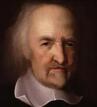
托馬斯·霍布斯
英國政治家、哲學(xué)家
All mankind is in a perpetual and restless desire for power after power that ceaseth only in death.
Force and fraud are in war the two cardinal virtues.
Leisure is the mother of philosophy.
The desires, and other passions of man, in themselves, are in his own power; his real difficulties are, to know when they are to be controlled, and when not.
A law of nature, lex naturalis, is a precept or general rule found out by reason, by which a man is forbidden to do that which is destructive of his life or takes away the means of preserving the same.
In such condition there is no place for industry...and which is worst of all, continual fear and danger of violent death.
Life in the state of nature is solitary, poor, nasty, brutish, and short.
大自然造就了人們?cè)谏眢w和心智的才能上如此相等,以至于盡管有時(shí)候可能會(huì)有一個(gè)人明顯在身體上更強(qiáng)壯,或者在思維上更敏捷,但總結(jié)一切,人與人之間的差異并不是如此重大,以至于一個(gè)人可以因此而主張自己有權(quán)享受任何另一個(gè)人也可以同樣主張的權(quán)益。
在這種人人對(duì)人人的戰(zhàn)爭中,還有一種后果;沒有什么可以不公正。對(duì)于權(quán)利和錯(cuò)誤、正義和不正義的概念在那里無所適從。沒有共同的權(quán)力,就沒有法律;沒有法律,就沒有不公正。
沒有藝術(shù);沒有文學(xué);沒有社會(huì);最糟糕的是,持續(xù)的恐懼和暴力死亡的危險(xiǎn);人的生命是孤獨(dú)、貧窮、丑陋、野蠻和短暫的。
人類并非天生社會(huì)動(dòng)物。
一份不允許我用武力捍衛(wèi)自己免受攻擊的契約總是無效的。
沒有人可以賦予自己剝奪自己生命或生命的一部分的自由。
對(duì)于看不見的事物的恐懼是每個(gè)人內(nèi)心所稱之為宗教的自然種子。
當(dāng)一大群人同意并契約時(shí),就會(huì)成立一個(gè)共和國,每個(gè)人都與每個(gè)人達(dá)成共識(shí),任何一個(gè)人或一群人被多數(shù)人授權(quán),成為他們所有人的代表。
自然權(quán)利...是每個(gè)人都有權(quán)利按照自己的意愿使用他自己的力量來維護(hù)自己的本性。
純粹自然狀態(tài)的條件...是每個(gè)人對(duì)每個(gè)人的戰(zhàn)爭狀態(tài)。
全人類不斷不息地渴望權(quán)力,只有在死亡時(shí)才停止。
在戰(zhàn)爭中,武力和欺騙是兩個(gè)關(guān)鍵的美德。
閑暇是哲學(xué)之母。