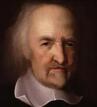
托馬斯·霍布斯
英國(guó)政治家、哲學(xué)家
Force and fraud are in war the two cardinal virtues.
The passions of men are commonly more potent than their reason.
人的激情通常比他們的理性更強(qiáng)大。
The right of nature... is the liberty each man hath, to use his own power, as he will himself, for the preservation of his own nature; that is to say, of his own life.
In the state of nature, profit is the measure of right.
The obligation of subjects to the sovereign is understood to last as long, and no longer, than the power lasteth by which he is able to protect them.
The power of a man, is his present means, to obtain some future apparent good.
一個(gè)人的力量,是他當(dāng)前的手段,以獲得未來(lái)明顯的好處。
Science is the knowledge of consequences, and dependence of one fact upon another.
科學(xué)是關(guān)于后果的知識(shí),以及一個(gè)事實(shí)對(duì)另一個(gè)事實(shí)的依賴。
Words are wise men's counters, they do but reckon by them; but they are the money of fools.
The passions that incline men to peace are fear of death, desire of such things as are necessary to commodious living, and a hope by their industry to obtain them.
促使人們傾向于和平的激情是對(duì)死亡的恐懼,對(duì)舒適生活必需品的渴望,以及通過(guò)自己的努力獲得這些的希望。
The obligation of subjects to the sovereign is understood to last as long, and no longer, than the power lasteth by which he is able to protect them.
Covenants, without the sword, are but words, and of no strength to secure a man at all.
沒(méi)有劍的契約只是空話,根本無(wú)法保護(hù)一個(gè)人。
No arts; no letters; no society; and which is worst of all, continual fear, and danger of violent death; and the life of man, solitary, poor, nasty, brutish, and short.
The right of nature... is the liberty each man hath, to use his own power, as he will himself, for the preservation of his own nature; that is to say, of his own life.
The obligation of subjects to the sovereign is understood to last as long, and no longer, than the power lasteth by which he is able to protect them.
No arts; no letters; no society; and which is worst of all, continual fear, and danger of violent death; and the life of man, solitary, poor, nasty, brutish, and short.