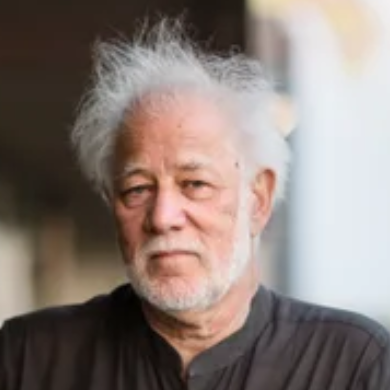
邁克爾·翁達(dá)杰
多元文化文學(xué)代表
The past is always carried into the present by small things.
過去總是通過小事被帶入現(xiàn)在。
We are all bit-part actors in each other's lives.
In a world of fugitives, the person taking the opposite direction will appear to be running away.
在一個逃亡者的世界里,朝相反方向走的人看起來像是在逃跑。
The first sentence of every novel should be: "Trust me, this will take time but there is order here, very faint, very human."
每本小說的第一句話應(yīng)該是:“相信我,這需要時間,但這里有秩序,非常微弱,非常人性化?!?/div>
We are communal histories, communal books. We are not owned or monogamous in our taste or experience.
我們是共同的歷史,共同的書。我們在品味或經(jīng)驗上不是被擁有或一夫一妻的。
I believe in such cartography – to be marked by nature, not just to label ourselves on a map like the names of rich men and women on buildings.
我相信這樣的地圖學(xué)——被自然標(biāo)記,而不僅僅是在地圖上像富人名字一樣標(biāo)記自己。
The desert could not be claimed or owned–it was a piece of cloth carried by winds, never held down by stones, and given a hundred shifting names.
沙漠不能被聲稱或擁有——它是一塊由風(fēng)攜帶的布,從未被石頭固定,被賦予了一百個變化的名字。
We are the real countries, not the boundaries drawn on maps with the names of powerful men.
我們是真正的國家,不是地圖上以強(qiáng)人之名劃定的邊界。
A novel is a mirror walking along a main road.
小說是一面沿著大路行走的鏡子。
We die containing a richness of lovers and tribes, tastes we have swallowed, bodies we have plunged into and swum up as if rivers of wisdom, characters we have climbed into as if trees, fears we have hidden in as if caves.
我們死去時,心中裝滿了愛人和部落,我們吞下的味道,我們投入并游過的身體,仿佛智慧的河流,我們爬進(jìn)去的角色,仿佛樹木,我們藏身的恐懼,仿佛洞穴。
The heart is an organ of fire.