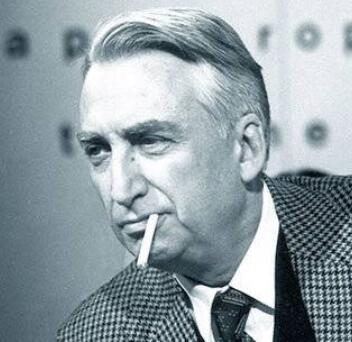
羅蘭·巴特
法國(guó)作家、思想家、社會(huì)學(xué)家
Myth is a type of speech chosen by history: it cannot possibly evolve from the 'nature' of things.
神話是歷史選擇的一種言語(yǔ):它不可能從事物的“本質(zhì)”中演化出來(lái)。
The lover's discourse is today of an extreme solitude.
今天,情人的話語(yǔ)是極端的孤獨(dú)。
Writing is that neutral, composite, oblique space where our subject slips away, the negative where all identity is lost, starting with the very identity of the body writing.
寫(xiě)作是中立的、復(fù)合的、傾斜的空間,在那里我們的主體滑落,所有的身份都丟失了,從寫(xiě)作的身體的身份開(kāi)始。
The photograph is literally an emanation of the referent. From a real body, which was there, proceed radiations which ultimately touch me, who am here.
What I claim is to live to the full the contradiction of my time, which may well make sarcasm the condition of truth.
To try to write love is to confront the muck of language: that region of hysteria where language is both too much and too little, excessive and impoverished.
Language is a skin: I rub my language against the other. It is as if I had words instead of fingers, or fingers at the tips of my words.
The text is a tissue of quotations drawn from the innumerable centers of culture.
The text you write must prove to me that it desires me.
你寫(xiě)的文本必須向我證明它渴望我。
To know that one does not write for the other, to know that these things I am going to write will never make me loved by the one I love.
知道一個(gè)人不是為他人寫(xiě)作,知道我將要寫(xiě)的這些東西永遠(yuǎn)不會(huì)讓我被我所愛(ài)的人愛(ài)。
The writer is someone who plays with the body of his mother.
作家是玩弄他母親身體的人。
The photograph is literally an emanation of the referent. From a real body, which was there, proceed radiations which ultimately touch me, who am here.