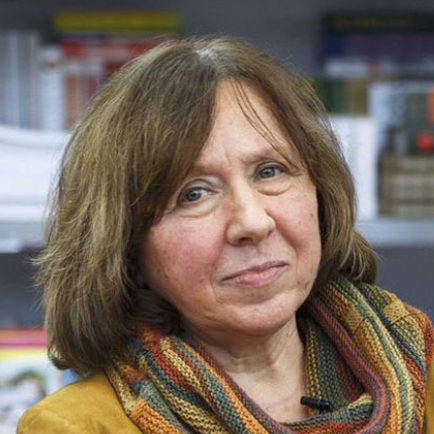
斯維特蘭娜·阿列克謝耶維奇
口述歷史的記錄者
When you listen to people, you realize that everyone has their own truth.
當(dāng)你傾聽人們時(shí),你會發(fā)現(xiàn)每個(gè)人都有他們自己的真相。
The Soviet man was a man who was always waiting—for rations, for orders, for the end.
蘇聯(lián)人是一個(gè)永遠(yuǎn)在等待的人——等待配給,等待命令,等待終結(jié)。
Memory is a fragile thing, easily distorted by time and politics.
記憶是脆弱的,容易被時(shí)間和政治扭曲。
The worst thing about war is that it makes people get used to death.
戰(zhàn)爭最可怕的地方在于它讓人們習(xí)慣了死亡。
We live among myths, and sometimes we don’t even realize it.
我們生活在神話之中,有時(shí)甚至意識不到這一點(diǎn)。
The truth is not always beautiful, but the thirst for it is.
真相并不總是美麗的,但對真相的渴望是美麗的。
In every person, there is an abyss. Sometimes you look into it, and sometimes you don’t.
每個(gè)人心中都有一個(gè)深淵。有時(shí)你會凝視它,有時(shí)你不會。
People don’t want to remember pain; they want to remember love. But pain is also part of our history.
人們不想記住痛苦,他們想記住愛。但痛苦也是我們歷史的一部分。
The Soviet Union was a civilization of fear, where people lived in constant dread of the knock on the door at night.
蘇聯(lián)是一個(gè)恐懼的文明,人們生活在持續(xù)的對夜間敲門聲的恐懼中。
War is the ultimate human drama, where the best and worst of humanity is revealed.
戰(zhàn)爭是人類終極的戲劇,在這里人性最好和最壞的一面都被展現(xiàn)出來。
- «
- »