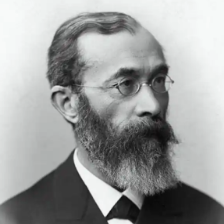
威廉·馮特
實(shí)驗(yàn)心理學(xué)之父
心理學(xué)的任務(wù)是研究心理生活的規(guī)律。
經(jīng)驗(yàn)的直接內(nèi)容是唯一可以作為心理學(xué)研究主題的事實(shí)。
靈魂是心理過(guò)程的總和,從其因果相互聯(lián)系的角度來(lái)看。
普遍認(rèn)為心理生活是一個(gè)整體,這一點(diǎn)可以毫無(wú)保留地接受。
The will is the central organizing force of mental life.
意志是心理生活的核心組織力量。
Language is the key to understanding higher mental processes.
語(yǔ)言是理解高級(jí)心理過(guò)程的關(guān)鍵。
The study of mental processes requires both experimental and comparative methods.
研究心理過(guò)程需要實(shí)驗(yàn)和比較方法。
Voluntary actions are the result of apperception.
自愿行為是統(tǒng)覺(jué)的結(jié)果。
Feelings are the subjective aspect of mental processes.
情感是心理過(guò)程的主觀(guān)方面。
The task of psychology is to analyze the contents of consciousness into its elements.
心理學(xué)的任務(wù)是將意識(shí)內(nèi)容分解為基本元素。
Consciousness is a continuous flow, not a series of discrete elements.
意識(shí)是一個(gè)連續(xù)的流動(dòng),而非一系列離散的元素。
Psychology must be based on direct experience and introspection.
心理學(xué)必須建立在直接經(jīng)驗(yàn)和內(nèi)省的基礎(chǔ)上。