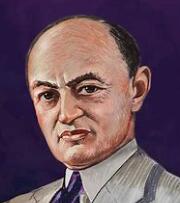
約瑟夫·熊彼特
美籍奧地利政治經(jīng)濟(jì)學(xué)家
The process of creative destruction is the essential fact about capitalism.
創(chuàng)造性破壞的過程是資本主義的基本事實。
The theory of economic development is the study of how the economic system generates the forces which incessantly transform it.
經(jīng)濟(jì)發(fā)展理論研究的是經(jīng)濟(jì)系統(tǒng)如何產(chǎn)生不斷改變它的力量。
The first task is to understand the problem, the second to find a solution, and the third to carry it out.
第一項任務(wù)是理解問題,第二項是找到解決方案,第三項是執(zhí)行它。
The function of entrepreneurs is to reform or revolutionize the pattern of production by exploiting an invention or, more generally, an untried technological possibility for producing a new commodity or producing an old one in a new way.
Capitalism, then, is by nature a form or method of economic change and not only never is but never can be stationary.
The opening up of new markets, foreign or domestic, and the organizational development from the craft shop and factory to such concerns as U.S. Steel illustrate the same process of industrial mutation—if I may use that biological term—that incessantly revolutionizes the economic structure from within, incessantly destroying the old one, incessantly creating a new one.
The fundamental impulse that sets and keeps the capitalist engine in motion comes from the new consumers' goods, the new methods of production or transportation, the new markets, the new forms of industrial organization that capitalist enterprise creates.
Innovation is the market introduction of a new technical process, product, or organizational form.
創(chuàng)新是市場引入新的技術(shù)流程、產(chǎn)品或組織形式。
- «
- »